
How a tarmac drive is built, layer by layer
The drawing on our home page shows a typical build-up in section. Here is what each layer is for. Depths vary with the ground and the use, so we look at each job before quoting.
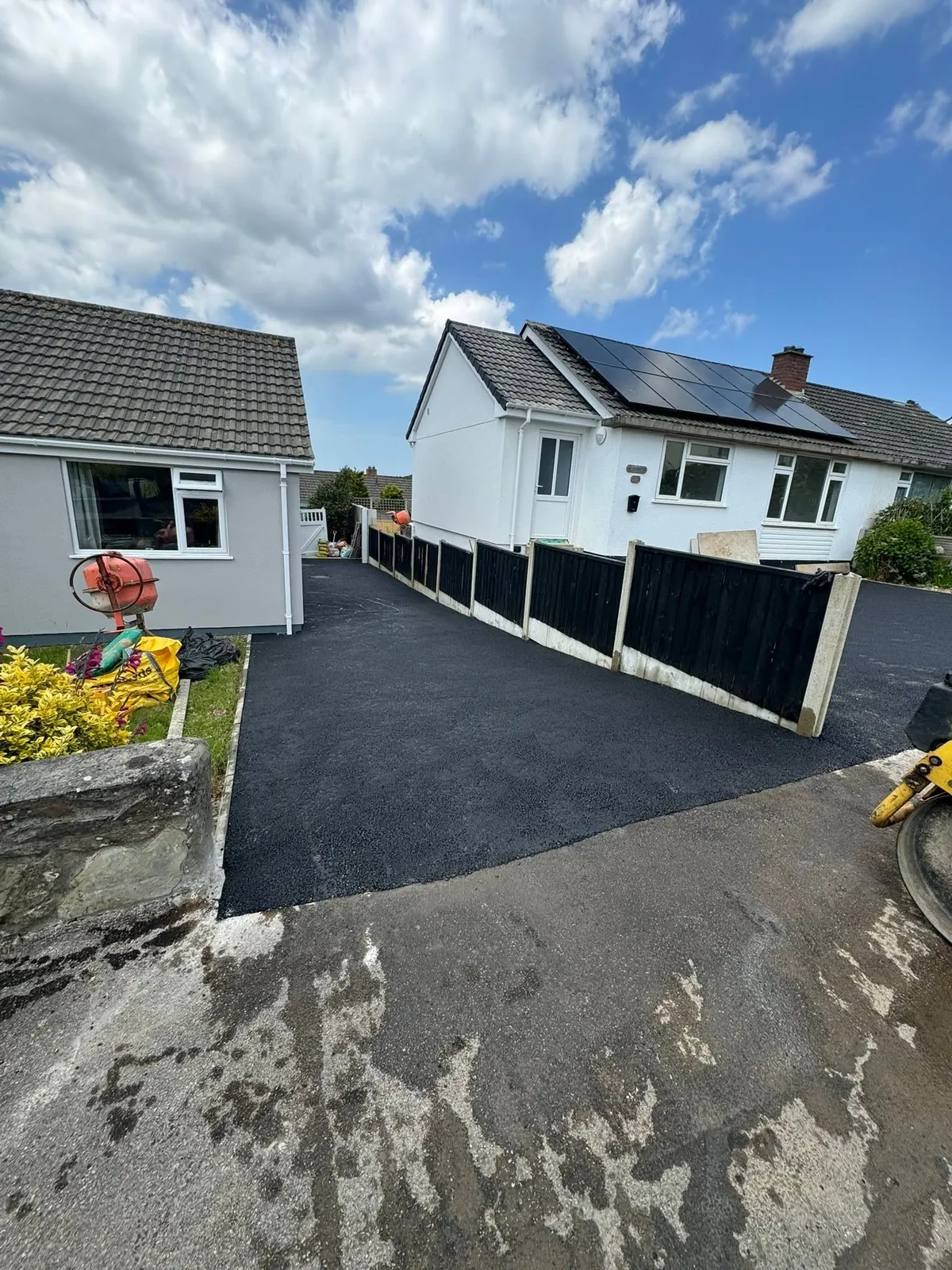
1. Dig-out
The old surface or topsoil is removed to a depth that leaves room for the stone and the tarmac. A mini digger and a tipper do most of the work.
2. Sub-base
Compacted stone gives the drive its strength and lets water drain. A thin or soft base can let a surface sink or crack.
3. Edging
Kerbs or block edging are set on a concrete haunch to hold the edge. Weak edges can let a tarmac drive spread at the sides.
4. Binder and surface course
The binder course gives a level, strong layer; the surface course is the finished black skin you see. Laid hot and rolled, it is levelled and sealed at the edges.
Falls
The whole thing is shaped so water runs off to a lawn, a gully or a channel drain. That shape is set while the stone is laid.
Quick answers
How long does a drive take?
It depends on size and what comes out. We will tell you when we price it.
Can I walk on it straight away?
Ask us about the aftercare for your job; new tarmac needs time before heavy loads.